
Most people come across business cards on a daily basis. They’re often given out by salespeople, they’re on the desk of our banker or insurance agent, or they can be seen pinned to a board in the local coffee shop. It can be tricky to make your business card stand out when they are so commonplace, but here are six suggestions to make the ubiquitous business card something special.
Duplexed Cards
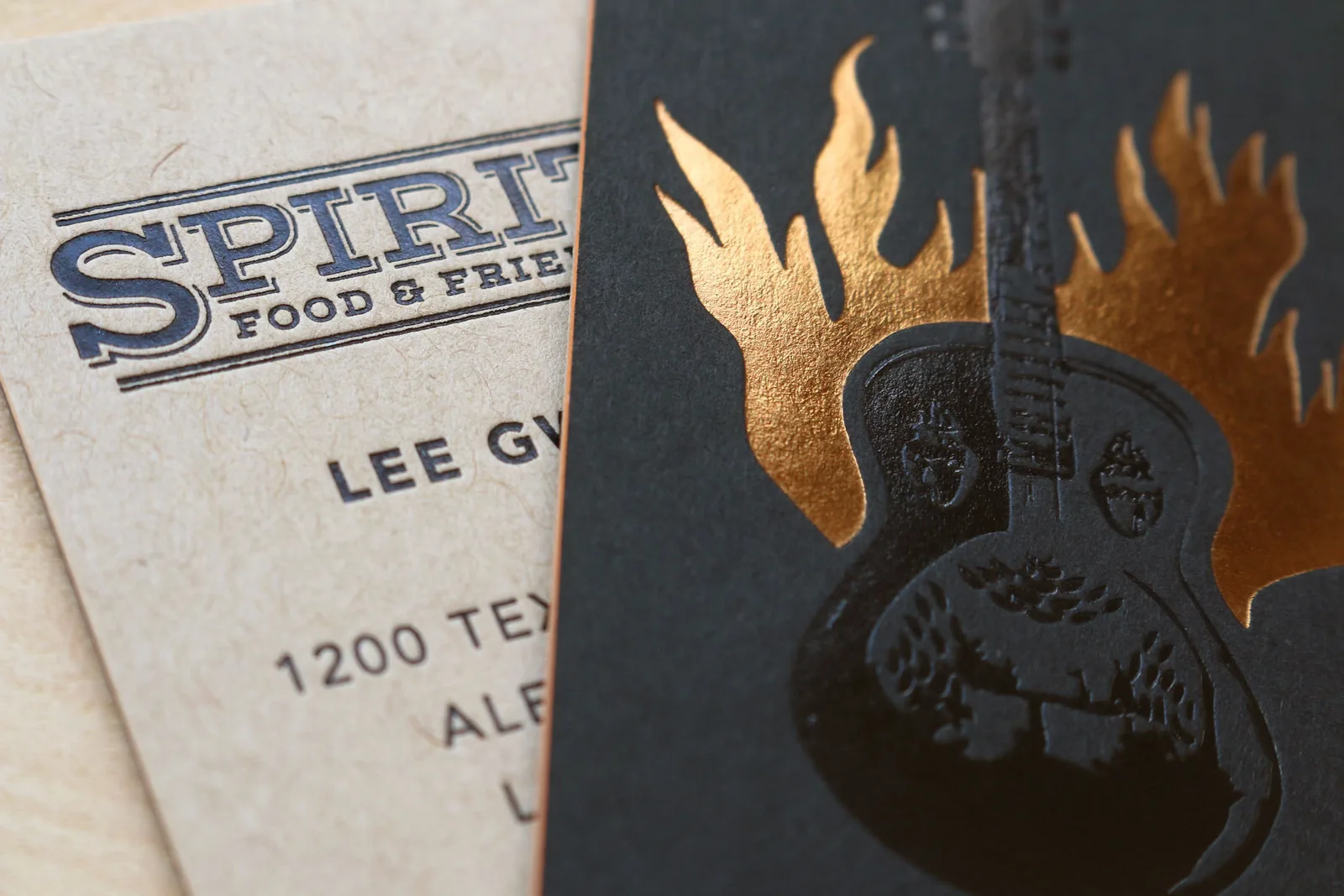
The process of printing the front and back of a card on different colored papers and then mounting them together after printing is called duplexing. A duplexed card is a great way to add visual interest to a business card design. Printing letterpress on a double-thick card can also allow for a deeper impression on either side. This card that was printed for Spirits Restaurant used two different colored foils on French Poptone paper in Black Licorice and French Speckletone in Kraft, with a bright pop of color in between using French Poptone in Orange Fizz.
Foil Stamping
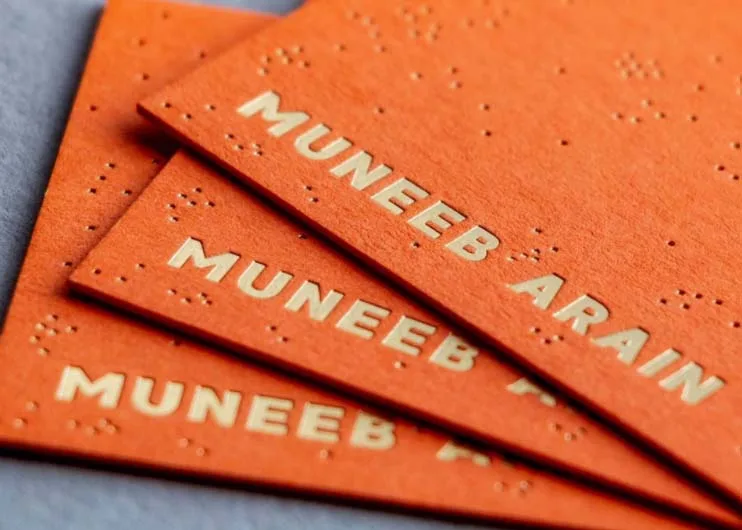
Using foil in place of, or in addition to ink is a great way to add detail in a non-traditional way. Modern foil stamping uses copper dies that are heated to allow for crisp lines and detail in your design. Foil can be the perfect way to add embellishment while still having the tactile impression of letterpress. This card that was printed for graphic designer Muneeb Arain on double-thick Colorplan paper in Mandarin using gold foil on both sides is a good example of using foil stamping in an interesting way to add depth and interest.
Blind Deboss
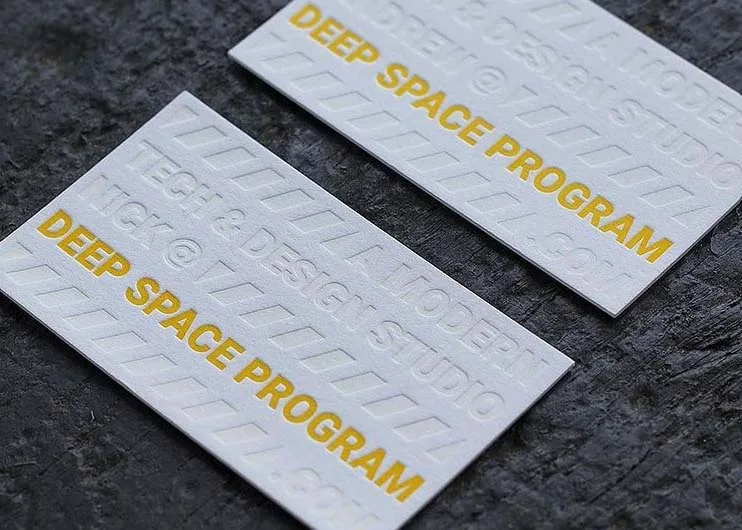
A blind deboss is simply a letterpress impression without the use of ink, leaving a subtle and modern relief in the paper. Some logos and designs work beautifully with the use of a blind deboss, especially those that are more simple in design. More complex or detailed designs may lose some detail or readability without the use of ink or foil. We can also use a clear varnish in place of ink, which can allow for more legibility while still employing a clean and modern printing technique. This deep blind deboss on a card for Deep Space Program was printed on double-thick Fluorescent White Neenah Cotton paper.
Chipboard
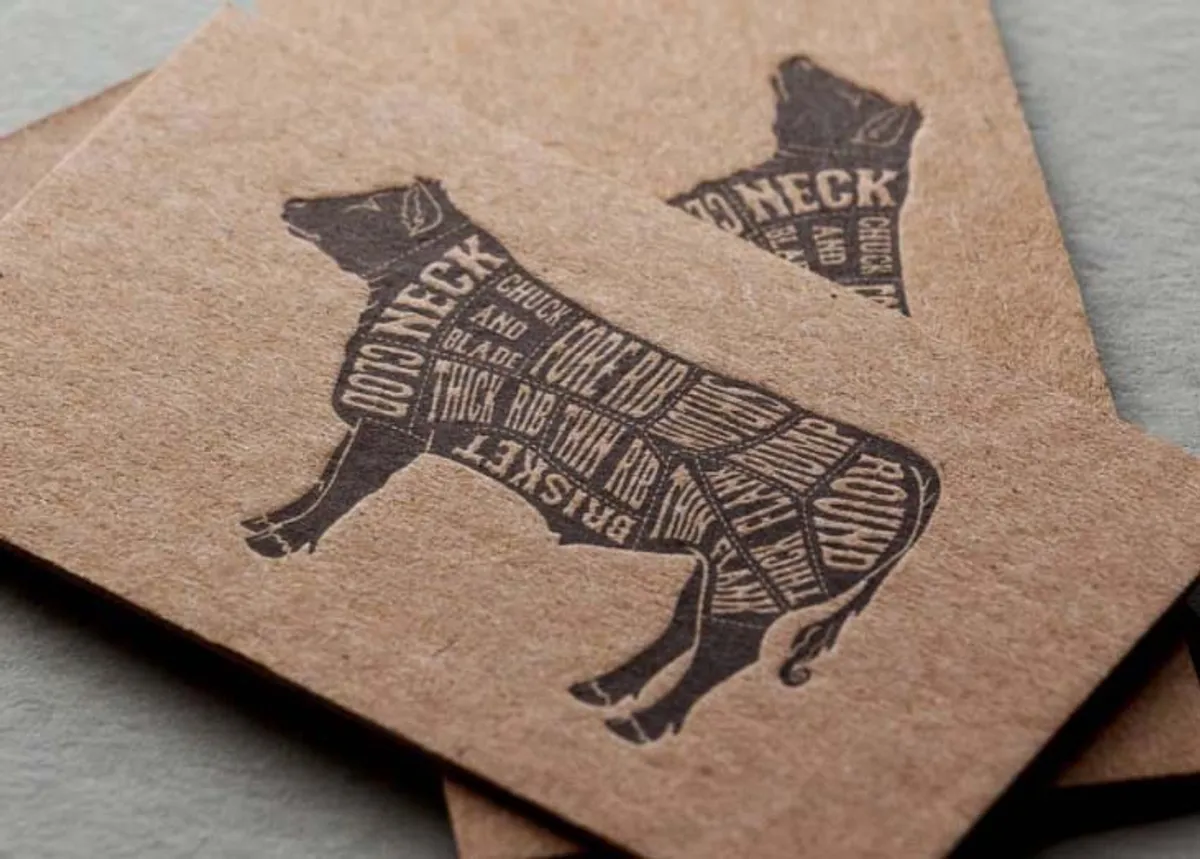
Recycled materials like chipboard work great with letterpress and stand out in a sea of white business cards. Black or colored inks printed on brown kraft chipboard make a graphic statement and can add a sense of personality to the design. These cards printed for master butcher James Tormey are printed front and back with black ink on 50pt recycled chipboard. The thick and sturdy chipboard makes for a bold impression when handing them out to clients or other industry professionals.
Wood Grain Texture
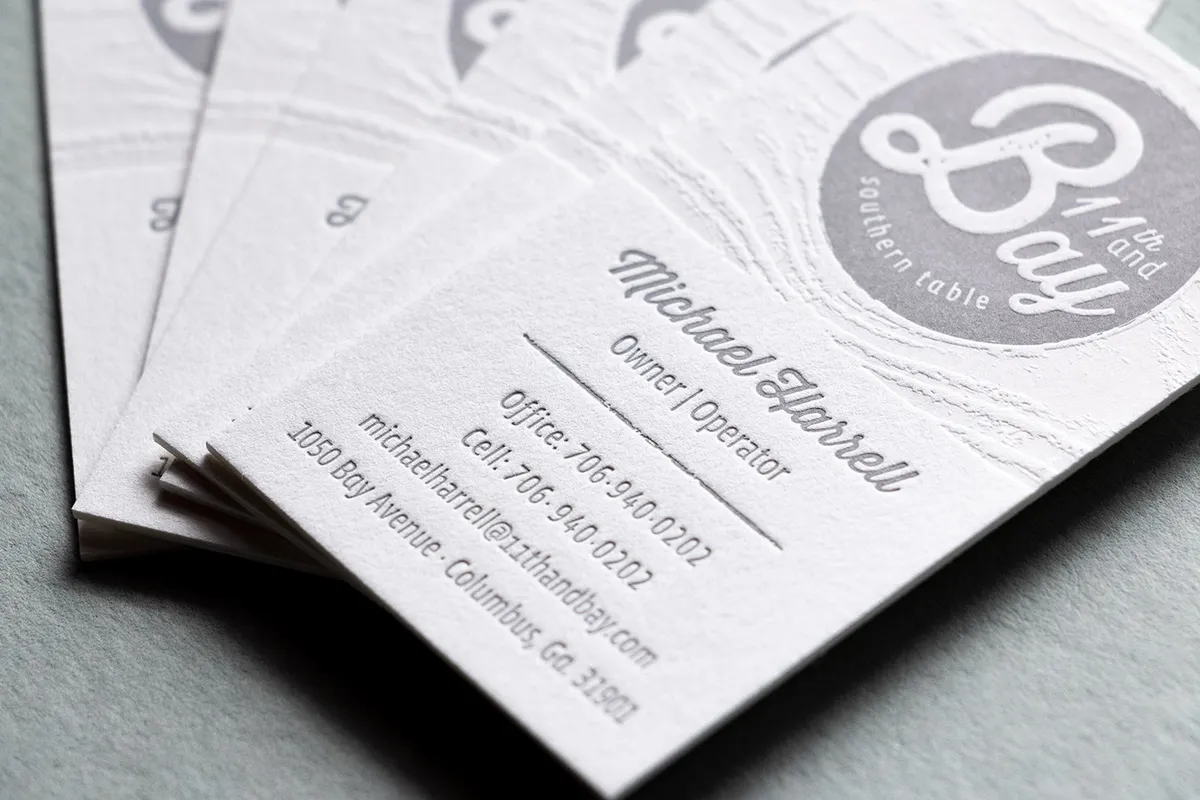
Using polymer plates, texture can be added to your design in a variety of ways. The use of wood grain, for example, creates an added layer of interest and detail to what would otherwise be a fairly traditional business card. These cards created for restaurant 11th and Bay Southern Table were printed on cotton paper using a blind deboss to create the wood grain texture and a one-color letterpress for the rest of the design. The subtle yet striking blind deboss texture makes these cards really stand out.
Black Business Cards
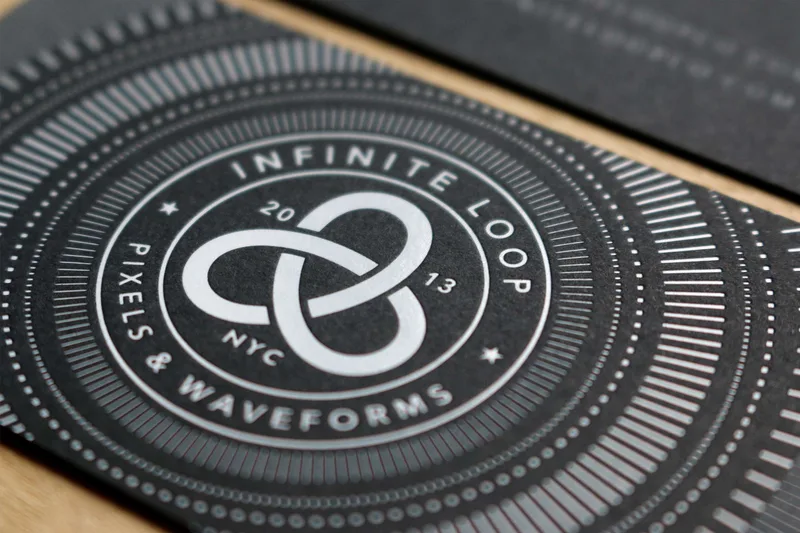
There aren’t many letterpress business card styles out there more striking than one printed on dark black paper. Using either foil stamping or white ink digital printing, the combination of a white design on a deep black paper is classic and edgy at the same time. These stunning business cards created for Infinite Loop were printed using white foil on double-thick 260lb Classic Crest paper in Epic Black.
Edge Painting
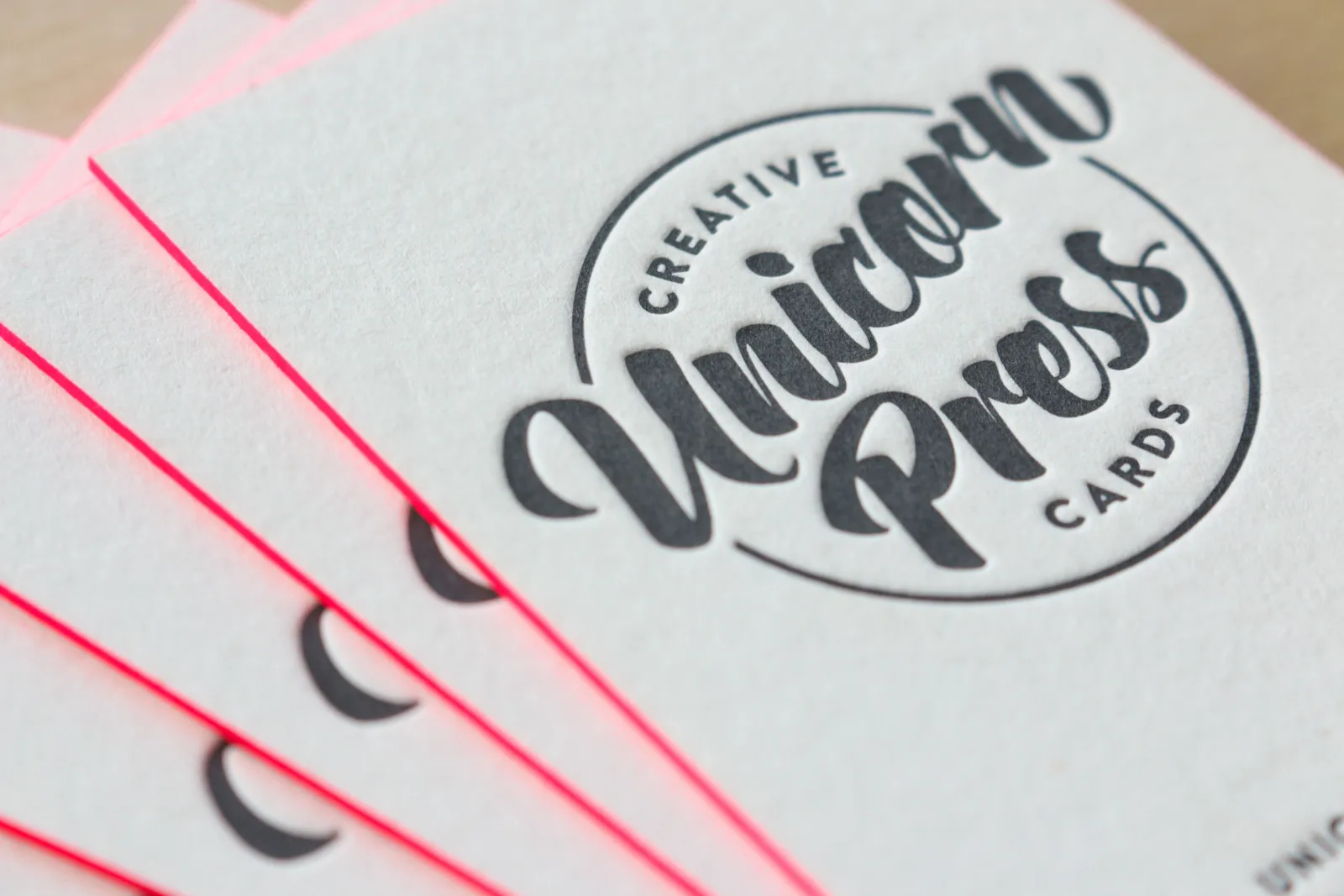
Even the simplest of designs can stand out when a pop of color is used in an unexpected way. Edge painting is an easy method to add a little something extra to your business card. We hand mix paint to your specifications and then apply it evenly to the edges to create a colored edge. Edge painting works best on thicker paper stocks, like double-thick cotton or cards that are duplexed.