
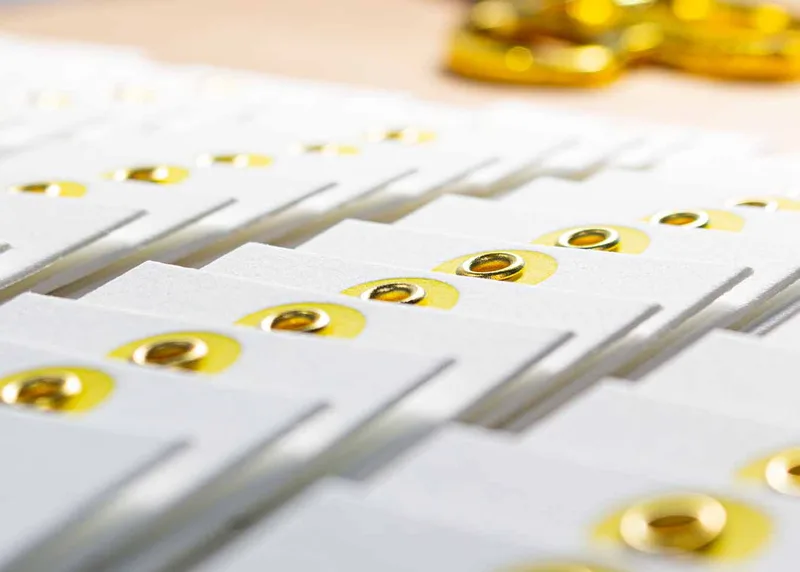
The hang tag (or swing tag, as it is sometimes known) has long been considered just a humble piece of paper that was attached to clothing or merchandise. However, we are now in the middle of a hang tag renaissance. This may sound like hyperbole, but in our modern society, every high-end retail item is finished with a bespoke hang tag, with the intent of showcasing a brand identity. However, this wasn’t always the case. We may consider them ubiquitous now, but hang tags are a relatively modern invention. Here, we go on a deep dive into the origins of the hang tag and more importantly, what the current state of affairs looks like.
The B.H. Era (Before Hang Tags)
While we can’t imagine shopping in today’s modern society without seeing a variety of hang tags greeting us as we browse the racks, we can safely assume that there were no hang tags made of papyrus affixed to sarcophagi or woven slippers in ancient Egypt, just as we can reason that the ancient Romans did not use parchment to price Trojan horses. However, they did get their start somewhere, and we think that the path from the beginnings to where we are today is pretty interesting and important to consider.
From the start of civilization until the early and mid-1800s, retail transactions were completely different than they are today. Starting in the earliest, most ancient of societies, haggling (or negotiating, if you want to dress it up a bit) was not only accepted, but completely expected. Along with bartering, haggling was the norm and it was accepted that an asking price was just a jumping off point for the deal. Most transactions took place at a vendor’s stall or, in more recent history, a small general store manned by the shopkeeper, a person who was fully familiar with his fairly limited inventory. These intimate and personal sales allowed for some back-and-forth between both parties, each one aiming for the best price until settling somewhere in the middle.
However, after the boom of the Industrial Revolution, goods were in higher demand, along with being easier to come by. Once the supply and demand chain was established, retail as we know it was off to the races. Consumerism was on the rise, which meant that shopping wasn’t only done for the essentials, but also for fashion, home goods, and recreation. Retail therapy was now a very important part of the shopping experience! Small vendor stalls and general stores were soon competing with the very new concept of a department store. John Wanamaker is often credited with opening the first modern department store in the United States; a large retail space in Philadelphia that he opened in 1861. Wanamaker introduced a revolutionary concept — fixed pricing. Larger stores meant less of a curated experience for the customer; the one-on-one haggling was no longer a viable option when business owners and clerks were dealing with much more merchandise and many more customers. Prices were no longer variable, changing on demand when a customer offered to pay less – and so the need for a price tag sprang from this new phenomenon.
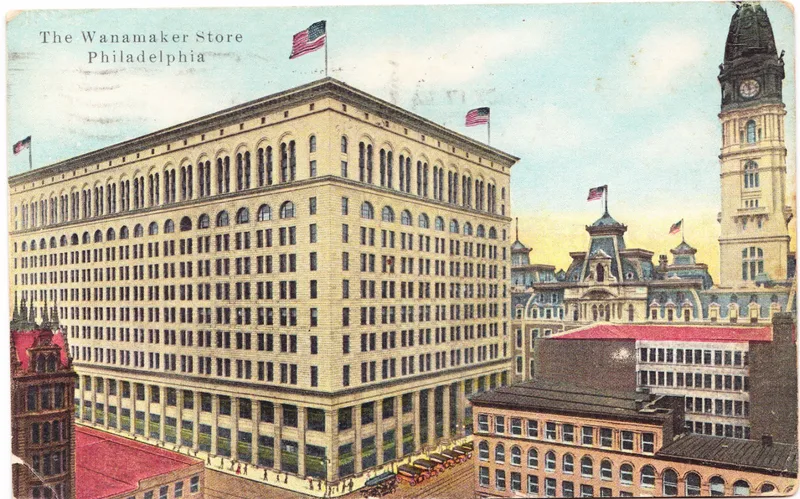
The Wanamaker Store in Philadelphia – The beginnings of the modern hang tag are taking shape. Image from Wikipedia.
The Birth of our Hero
It wasn’t long before fixed pricing became the norm. Customers liked the ease of the transaction, along with being able to consider a price by just checking the price tag. Before long, the hang tag was everywhere, attached to all manner of merchandise. The early hang tags were mostly utilitarian, providing a price and perhaps a small amount of detail about the product it was affixed to. However, it wasn’t long before logos and brands made their way onto the previously simple price tags. In the mid-20th century, bespoke hang tags became fashionable, with brands and businesses yearning for a way to personalize the shopping experience while also providing an “identity” to the product being sold. By attaching a custom tag to an item, customers could associate a particular line of clothing or jewelry to the designer or brand.
In the modern era, no designer item is complete without a beautiful hang tag.
Hang tags may have started as a tool to streamline the shopping experience, but they’re now used as a marketing tool, allowing the customer to identify with the maker of a product. Once a customer identifies with a brand, the company is then connecting with that customer on a deeper, more personal level. Your brand’s values are expressed through your identity, and using a custom, high end hang tag helps to position your company as one of quality in the minds of the consumer. The mood and feel of your tag all adds to the impression you’re making. The tag now has the ability to convey a story, each component and design choice working together to create an all-over impression on each potential customer. All of this plays a role in the customer’s decision making process, so the hang tag is critical. The same amount of care and consideration that goes into the making of a product can also go into the design and creation of a custom hang tag.
The Form and Function of a Hang Tag
Elements such as premium papers and finishing methods should be considered carefully when deciding what message you want your hang tag to send. Earthy, eco-conscious brands may want to use recyclable papers such as chipboard, to help add to the credibility of their branding message. High-end fashion brands may want thick, luxe papers that gracefully pass on the message that this product is special and worth the investment. The values of your brand, ranging from a company you can trust to something more aspirational, are deeply connected with every branding opportunity, and the hang tag is no different. Keeping this in mind while designing your hang tag is critical, along with deciding on the intended impression you’re trying to make.
Another thing to consider when designing your hang tag is how to make it stand out. You’re trying to grab the attention of a shopper amidst a sea of other brands and designers, and so taking the time to create a stunning tag can really pay off. The hang tag is often the first impression customers will have of your brand. Going the extra mile to produce a tag that feels important and intentional instead of a throwaway piece of marketing is going to make that potential new loyal customer feel like this particular item is something special. Think about what hang tags you’ve seen and what stood out to you.
Deciding on how your tag will attach to your products is an important part of the design process. Most tags will have either a drilled hole or a metal eyelet, allowing for string or ribbon to easily attach each tag to a product. Going even further, your design mock-up should include the type and color of string, and if each string will be affixed to a pin (this method works well for textiles). There are even a multitude of pin styles and colors to choose from. The possibilities are virtually endless, but it is important to figure out what may seem like the more trivial of details. These small details are often overlooked, but can have just as much impact on the overall look and impression of your hang tag as your logo.
Using premium printing methods can help your hang tag stand out to consumers and retailers alike. A letterpress hang tag printed on a textured, thick stock creates a feeling of luxury. That attribute will then be transferred to your product in the minds of your customers, just from association to such a high end tag. A letterpress printed hang tag could be your product’s signature of its inherent quality and authenticity. It signals that you have considered every detail and that your intentions as a company are higher than the rest of the pack.
To find out more information about hang tags and how we can help craft a truly one of a kind piece for you and your company, reach out to us via our quote request form or by calling us at 1-800-213-6408. We’re always willing and eager to help walk you through the process and answer any questions you may have about design, paper selection, or finishing touches.
Examples of Hang Tags
Maggie Louise Bridal
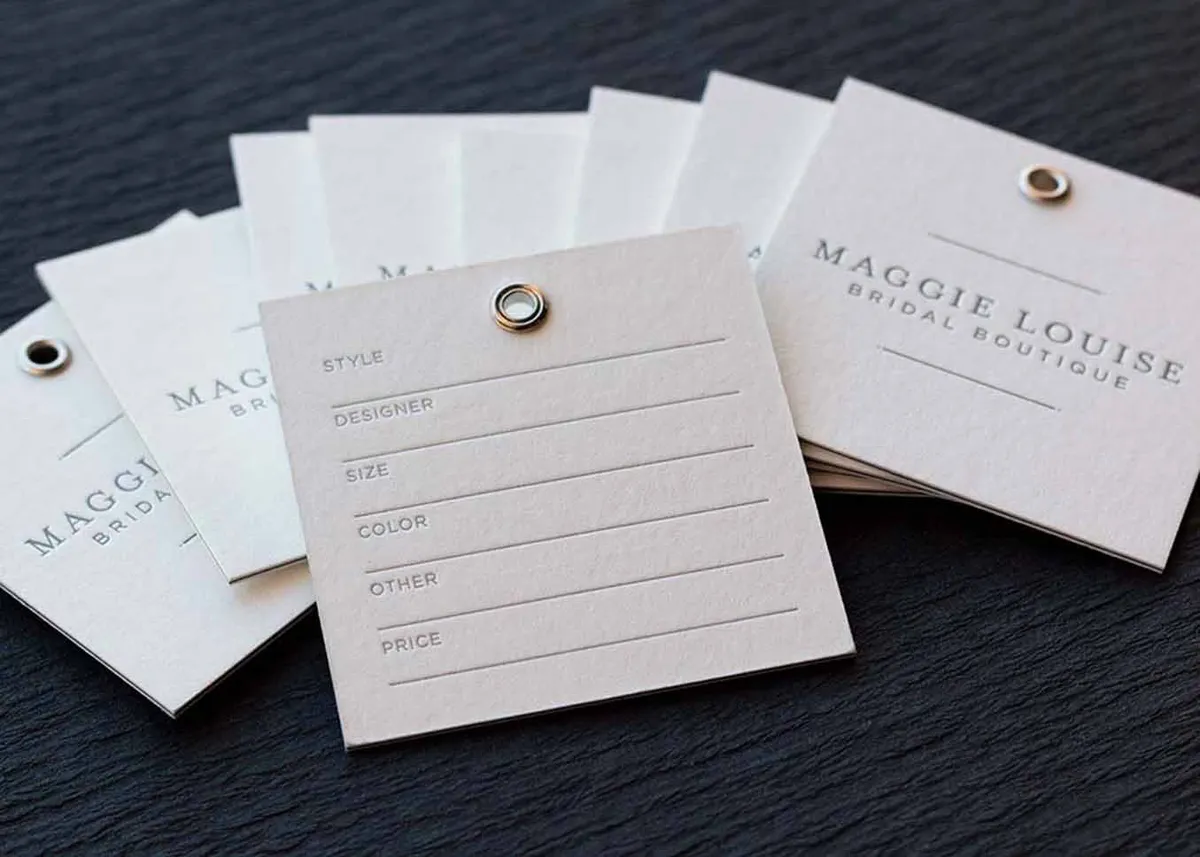
Maggie Louise Bridal is a high-end bridal boutique located in Memphis, Tennessee. They came to us wanting to elevate the experience of shopping for exclusive bridal gowns and these custom letterpress hang tags did just the trick. Each tag was letterpressed with light gray ink on the front and back, then triplexed with a coordinating gray inner sheet for a pop of color and luxury. The front side was printed with the Maggie Louise Bridal logo, for a consistent branding touch. The reverse side was printed with gown specifications so that the bridal consultants could fill in the details of size and designer by hand. Finished off with a silver eyelet to attach to each gown, these tags helped add to the special experience of choosing a wedding dress.
Bourbon + Blue Hang Tags
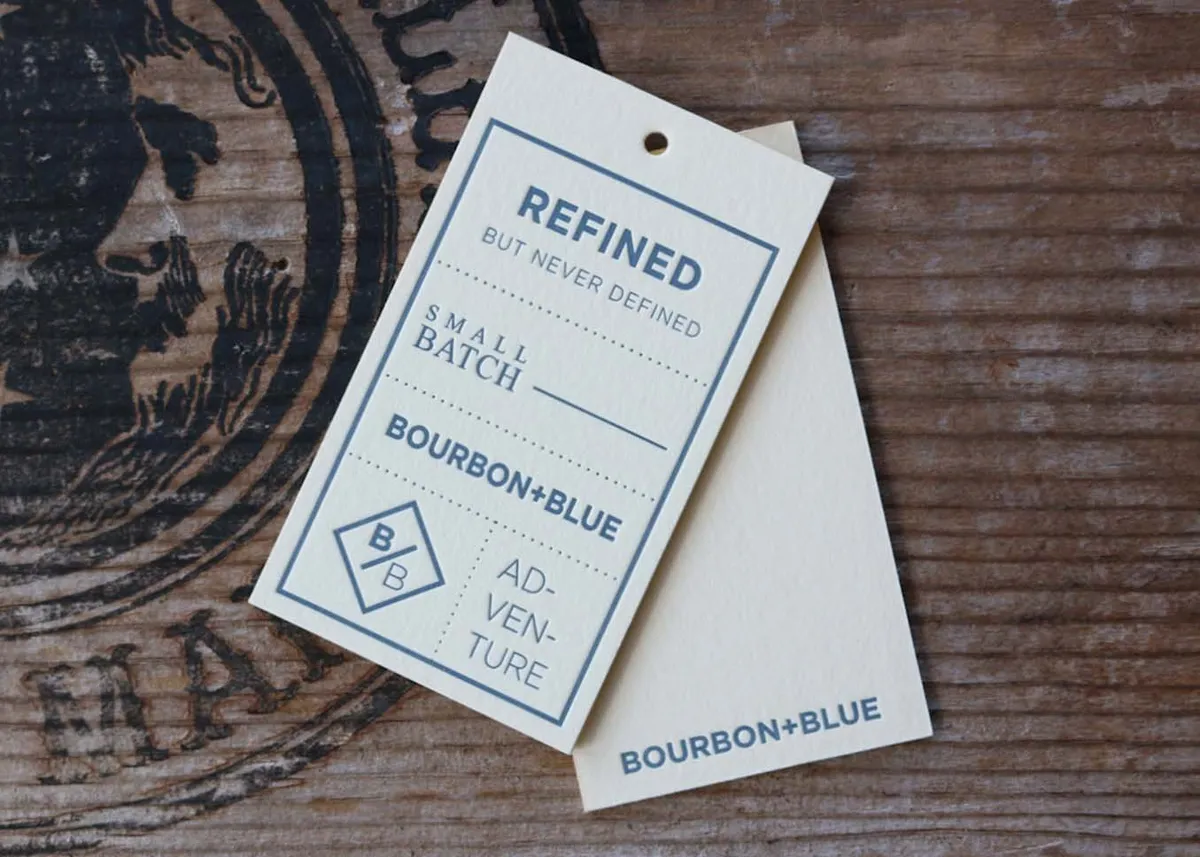
These premium hang tags created for small batch spirits maker Bourbon + Blue were both elevated and practical. Printed using a deep letterpress impression on both sides, these double-thick cards made a statement no matter what side you were looking at. 220lb Crane’s Lettra cotton paper in Pearl White added a nice touch of texture and luxury, each tag finished with a drilled hole for string. Each tag had a space for a hand written batch number, creating the opportunity for a mixture of high end stationery and a personal touch.
Oysterman’s Daughter Hang Tags
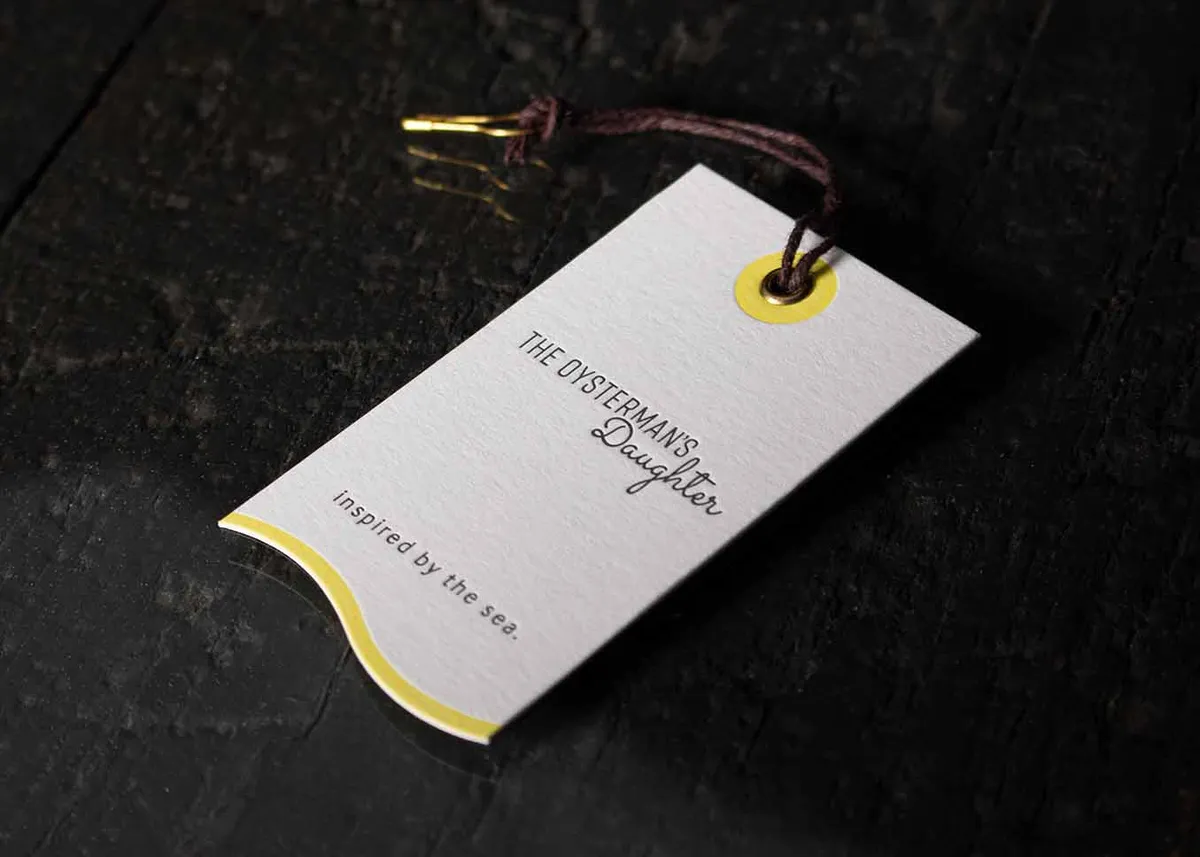
These tags were created for Connecticut-based specialty lifestyle shop The Oysterman’s Daughter. Because the history of their shop goes hand-in-hand with a tradition of fresh oyster harvests, these tags needed to invoke the spirit of their brand. Using a custom die-cut, the shapes of the waves are mimicked in the paper, creating a sense of authenticity with the fisherman roots of the brand’s story. Printed on double-thick bright white Crane’s Lettra paper, these tags used letterpress black and bright yellow to enforce the color story of the shop. Finished off with brass-plated eyelets, jute string, and brass-plated bulb safety pins, these are ready to be attached to some merchandise.
Ps and Qs Hang Tags
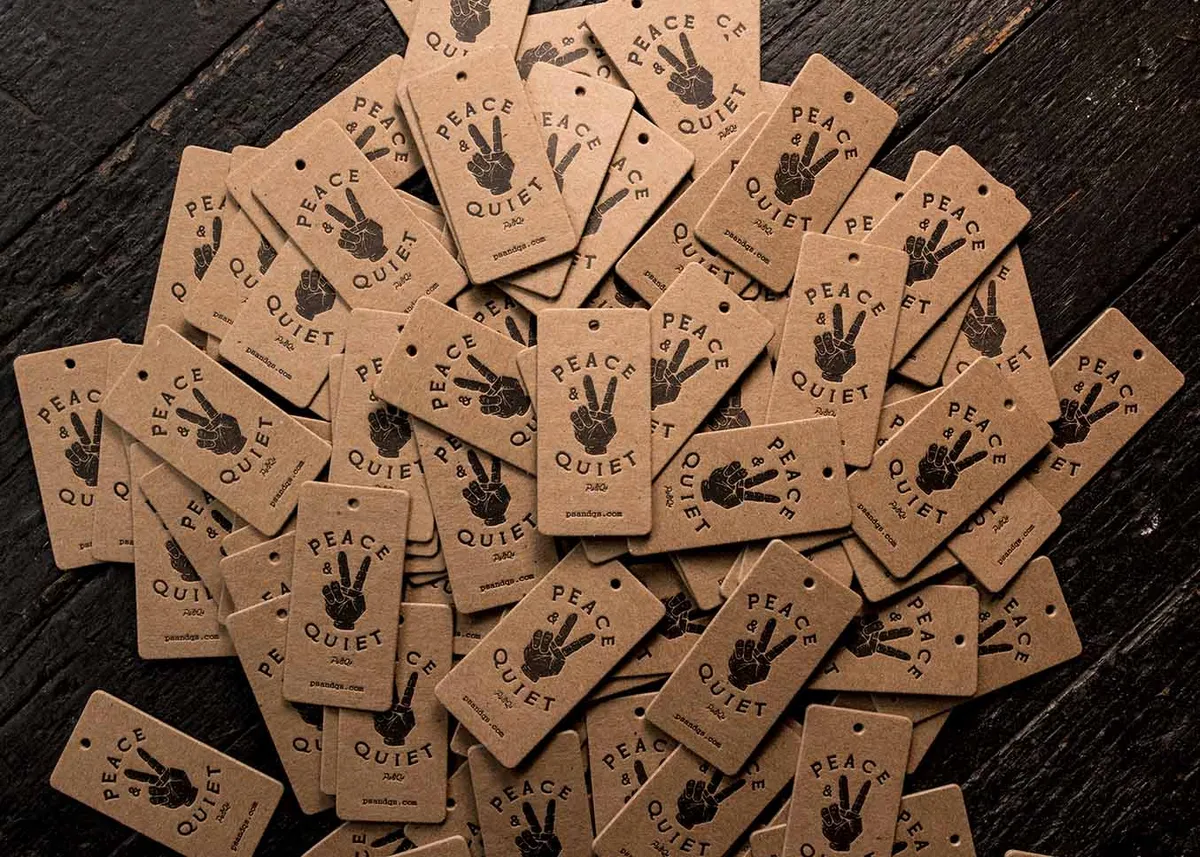
These letterpress hang tags were created for brand umbrella Ps and Qs, a website that showcases different apparel lines. Printed on sturdy chipboard with black ink, these textural tags are simple yet have a lot of personality. The paper choice sets the tone for these tags, the natural chipboard relaying a comfortable, earthy vibe. Chipboard can come in a variety of shades, but this particular client chose the warm brown shade. Finished off with rounded corners and a drilled hole for string, these tags are satisfyingly simple but also have a lot to say when it comes to a branding identity.
How Can I Order Letterpress Hang Tags?
Do you have an idea for a hang tag project? We can help! Whether you need help with your design set-up or just need printing advice, we are always excited to guide people through the printing process. Give us a call at 1-800-213-6408 or fill out the quote request form to get in touch with us. Once your design is ready and you have all the printing specifications nailed down (quantity, paper selection, finishing methods), we can prepare a printing estimate for you to consider. From there, we set up an invoice that you can both view and pay online. After payment, we will create a PDF proof within 1 business day and send that over for you to review. After your approval, we move into production and ship via UPS once the tags are ready. Please note that the typical turnaround time for hang tags is approximately 20 business days from the date of payment and proof approval.